

| Description:
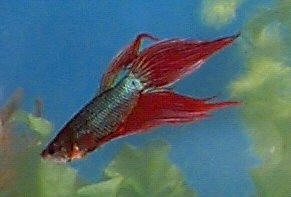
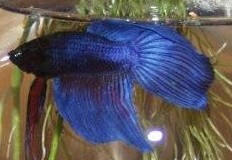
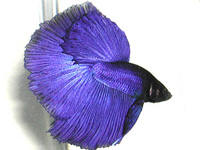
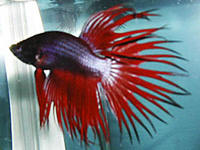
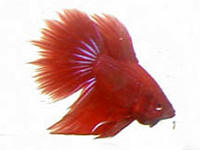
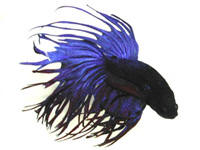
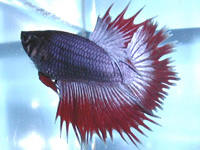
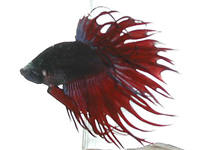
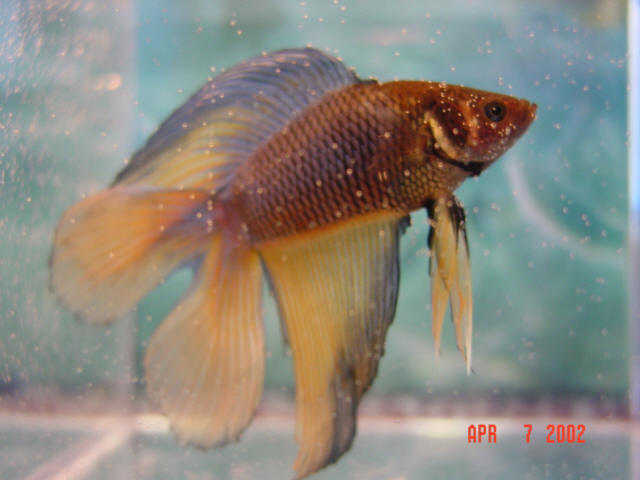
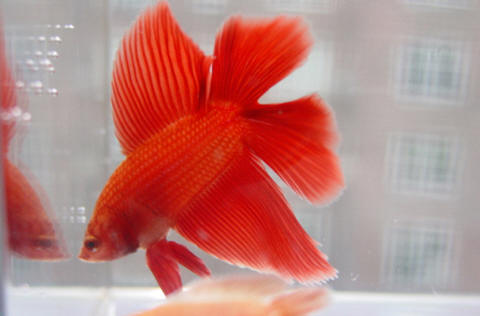
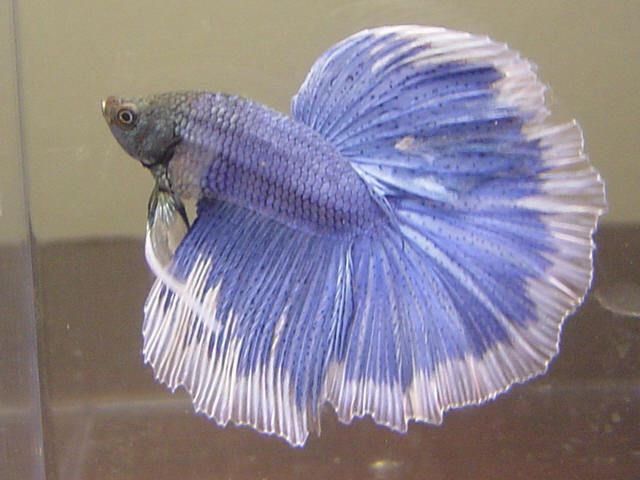
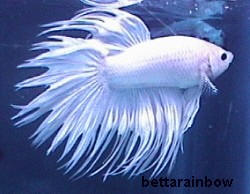
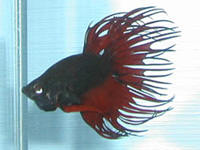
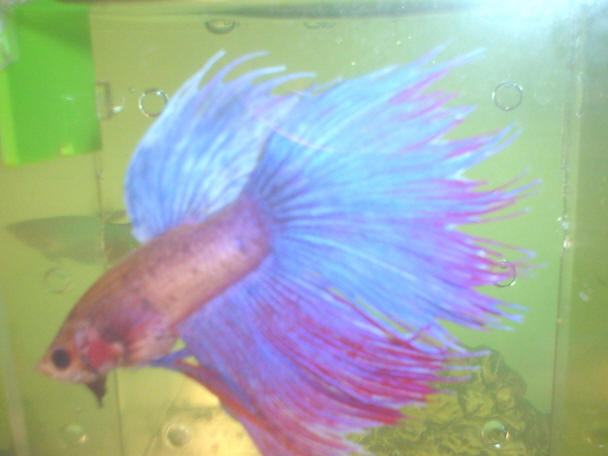
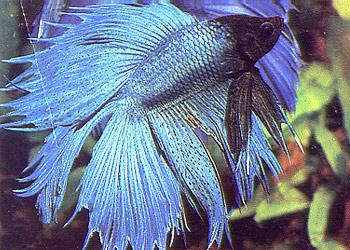
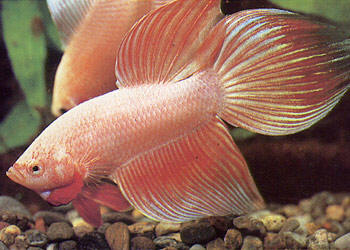
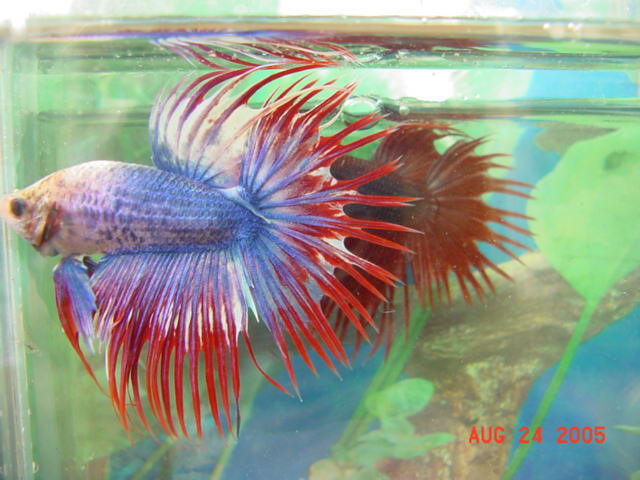
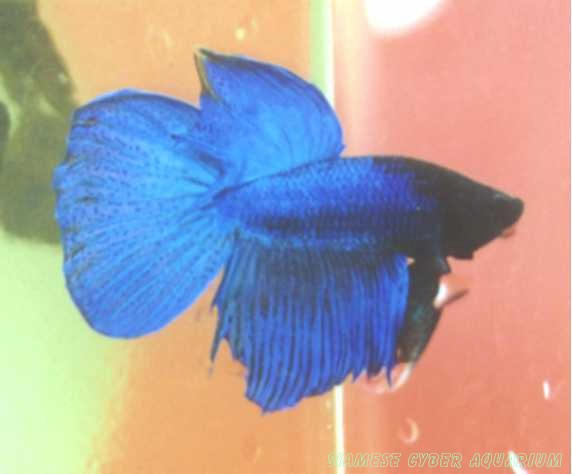
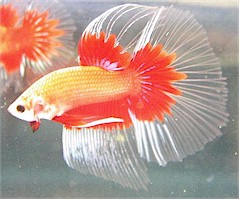
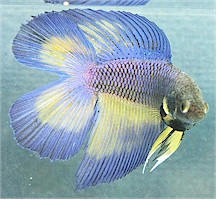
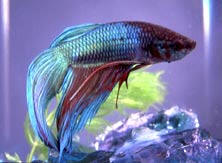
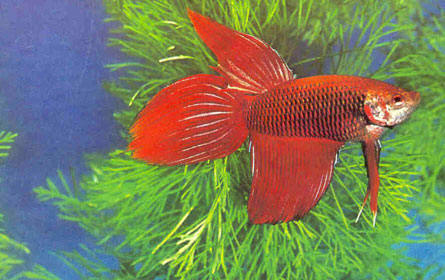
Betta Splendens, the Siamese fighting fish, more commonly known simply as a "Betta," is a small colourful fish that originated in Thailand. Males have elongated fins to attract females. The male has long colorful fins, while the females have shorter fins and are not as colorful. They vary in size and shape. The short-fin fish are categorized by color and color combinations, such as the solid color, the bi-color, and the multi-color combinations, such as the solid color, the bi-color, and the multi-color. The long-fin fish are categorized by the shape of the tail, such as delta, paddle, and half-full tail. History:
In Thailand, the fish has been raised in households since the Sukhothai Period, more than 700 years ago. Records from the reign of King Lithai of Sukhothai allude to fighting fish being reared for sport. In 1840, the King of Siam presented several of his prized fighting fish to a friend of Theodor Cantor, and he, in turn, gave them to Cantor, a doctor in the Bengal Medical Service. Although these fish were more colorful than their earlier counterparts, their predominant colors of olive green, black and red still left much to be desired. The fin lengths also varied from specimen to specimen. In 1849, Cantor published an article on the fighting fish he called Macropodus pugnax, var. It was not until 1909 that C. Tate Regan re-examined this and noted that pugnax was already a distinct species. Since the fish had no scientific name, Regan named it Betta splendens, according to Gene Wolfsheimer, author of Enjoy the Fighting Fish of Siam. Habitat/Care:
To fully understand their needs it is important to become familiar with their native habitat. Bettas originate in the shallow waters in Thailand (formerly called Siam, hence their name), Indonesia, Malaysia, Vietnam, and parts of China. They proliferate rice paddies, shallow ponds, and even slow moving streams. Although many fish keepers are aware that Bettas come from shallow waters, a key factor that is often overlooked is the water temperature. These countries are tropical, which means the water temperature is quite warm - often reaching into the 80's. Bettas thrive on heat, and will become increasingly listless when the water temperature falls below 75 degrees F. Water temperature is perhaps the biggest argument against keeping a betta in a tiny bowl (which cannot readily be heat controlled). An organ called a labyrinth allows bettas to breathe air from the water surface, thus permitting them to live in water with low oxygen levels. Because of this ability aquarists often keep bettas in small containers, but ideally a 3-gallon filtered tank or more is better and allows the bettas to stretch their fins. Even though Bettas do well in waters low in dissolved oxygen, that does not mean they require less oxygen than other fish. Studies have shown the betta that are denied access to the water surface to breathe died even though the water is contains high levels of oxygen. Therefore, betta must have access to the water surface to breath air directly from the atmosphere Optimally the water for keeping healthy Bettas should be soft, warm, with a neutral to slightly acidic pH. Water movement should be kept to a minimum, which means that power filters and powerheads are not suitable. Bettas may be kept in a community tank as long as the water conditions are met, and if no aggressive or fin-nipping fish are present. However, only one male may be kept in each aquarium, unless they are separated by a barrier. Mixing with other fishes:
Males must not be kept together, otherwise they will fight - sometimes to the death. Females can be kept together, but can be territorial. This is often a difficult fish to mix in a community tank. Many fish will nip on the long flowing fins, even some species which do not usually fin-nip. On the other hand, some bettas can be aggressive to fish they see as rivals (such as male guppies with their fancy tails). Diet:
In nature Bettas subsist almost exclusively on insects and insect larvae. They are built with an upturned mouth that is well suited to snatching any hapless insect that might fall into the water. Internally their digestive system is geared for meat, having a much shorter alimentary track than vegetarian fish. For this reason, live foods are the ideal diet for the betta, however they will adapt to eating flake foods and frozen and freeze dried foods. Brine shrimp, Daphnia, plankton, tubifex, glassworms, and beef heart, are all excellent options that may be found frozen or freeze dried. If flake food is fed, it should be supplemented with frozen and freeze-dried foods, and if possible live foods. |
Breeding:
Bettas have a fairly short lifespan, and are most successful as breeders when they under a year old (bettas in pet shops are usually at least six months old). They breed in bubblenests and do not require a large tank or special equipment. Most breeders find that a bare bottomed tank of roughly ten gallons works well, although smaller tanks are also suitable. Ideally the fish should be conditioned prior to breeding, by feeding them a diet of live foods. The water should be at a pH of about 7.0, and temperature around 80 or slightly above. The male will blow an elaborate bubble nest when he is ready to spawn. The female should be provided with a hiding place, as males may become aggressive during courtship. Even with a hiding place, it is common for the female to lose a few scales or have their fins frayed during spawning. When they are ready to spawn, the pair will display intense coloration and begin circling each other under the bubblenest. The male will wrap himself around the female who has turned on her back. As she expels the eggs, they are fertilized and begin to sink. The male will scoop up the eggs and spit them into the nest. From this point on the male will tend the brood. It is advisable to remove the female, as the male may become aggressive towards her as he tends his young. The male will continue to tend the bubblenest, spitting eggs that fall out back into the nest. In one to two days the eggs will hatch, and the fry will be visible hanging in the bubblenest with their tails pointing downward. They will feed off their yolk sack for another thirty six hours, during which time the male will continue to pick up any fry that fall out of the nest. The male should be removed within two days after the fry hatch, as they may eat the young once they are free swimming. The fry should be fed a couple of feedings daily of baby brine shrimp or very fine baby food. Tetra makes a dry mixture specifically for egglaying fish, and many pet shops carry frozen baby brine shrimp. Take care not to overfeed, as the uneaten food will foul the water and can quickly prove lethal to the fry. Disease:Remember that bettas are not big eaters and it is very easy to overfeed. Since fish have to eat and produce waste as a result of eating, water changes are a must, and there is no exception when it comes to bettas. In fact, since a lot of bettas are kept in small containers that don't have some sort of filtration, water changes are even more important and need to be done every 2 or 3 days to prevent toxic build up. When doing water changes it is very important to move any uneaten food or waste that may have settled to the bottom, and to replace about 80 percent of the water. While adding fresh water one can't forget to add a good tap water conditioner that removes chlorine, breaks the chloramine bond, and one that detoxifies heavy metals. Not adding a tap water conditioner could result in disaster. Disease is a natural occurrence in fish, and bettas will contract their share of it. Some of the more common diseases found in bettas are fin rot, fungus, and ick, however, they are susceptible to other diseases as well. There are measures that you can take to prevent disease, such as doing regular water changes, feeding the proper foods, and keeping the stress levels at a minimum. This does not mean that disease won't strike, and even some of the more seasoned aquarists will encounter disease.
|
42 comments:
love the attractive picz of various fighting fish! even for me who knows little about fish, this is so informative and let me get some understandings about the beautiful creatures in the seaworld :)
Wow! Very impressive! You should allow comments for every posting, as there is so much to talk about, I am sure many people would like to make comments. I hope you do not mind my observation. I will be back, you have a great blog here!
Hi Eugene: Wow, you have an incredible blog. Actually, the picture on my blog is not a picture of my Betta. It's just a random Betta picture I found on a Google search. You can use it, sure. For the record, an actual picture of my Betta is on http://mattwurm.blogspot.com/. Thanks for reading my blog. Have a good day.
I have 1 male in my 21/2 and 5 females in my 5 1/2 I guess I will have to wait for my breeders to breed. I am so excited. Beverly
That is a really informative fighter fish entry with some great images. Thanks for your hard work. I have been embedding some siamese fighting fish video on my sitre recently. There is a particularly good one of some fighter fish spawning.
Males can have short finnage too :/ you should also put other sexing tips such as the ovipositor in females.
u should tell veiwers how 2 tell sex apart.i do not know mine i think its a boy. Ive been on here all day reseaching fish(ive found out alot of stuff!)and every time i try 2 comment i have 2 sign-up. i do not know witch breed is my betta. personally im glad they changed the name from Siamese fighting fish 2 betta.
I love ur blog but can u but can i put pics on here of my betta
LOOOOOOOOOOONG! but that doesnt mean not interesting
r u approving my comments
I love every ones comments i have a betta myself is anyone on here
you have some nice pics. i have a male...ithink....whatever im not planning to have babies. whena looked a the breeds and mine looks like your unkown breed. can i post pics on here maybe you can help me. thanks for reading my blog
Great site! But I wish there was more on how to breed, becaue I want to breed my two fish soon. Since I am a first time breeder I want to know it all! Hopefully when I do breed them it is sucsessful! I have a albino male with blueish purple fins; & a light pink female with a light purple glaze! I can't wait to see how their fry turn out!
i love ur pictures!!!! I used to have alot of them.
well i just have a few questions? my younger fighting fish. he is acting a bit strange since i put another male fish in his tank with a divider down the middle. he is always laying at the bottom of the tank ( except for food time ) and when he was in his old tank by himself he was always swimming around and have a great time. he is also a lot smaller than the other one. so if you have anything to tell me please contact me at blueberry_crescent_lolly@hotmail.com
Regards Danielle
Dear Eugene: I love the attractive pictures of the betta fish. I have a question that no one can seem to answer. How did the betta fish get in the rice paddies in Asia? Please write back. Sincerely, Judy My email address is judyroseemily@yahoo.com. Thank you in advance.
Hi Eugene,
Thank you for the information about the beautiful fish!
A few facts about origin of the fish. You failed to mention Cambodia as the original home of the fish. Before there was Thailand, Laos, or South Vietnam, those territories belonged to the Kingdom of present day Cambodia (Khmer). Cambodian lost these territories after many wars with Thai and Vietnamese. These fish should have been correctly called "Cambodian Fighting Fish."
Cambodian people still enjoy watching and caring for these wonderful fish! The Cambodian have been living in Southeast Asia thousands of years when there were no Thailand or Vietnam. Anyway, it's not a Thai fish or Cambodian fish, they are for the rest of the world to enjoy. However, it's important to state the fact where its origninal habitate located. They are found mainly in Cambodia and Thailand (a former Cambodian territory).
Thanks...HoneyBee
how do you know if they are dead?
thanks for the knowledge that i get from u! now my babies are already adults and ready to breed and also fight! thanks ;)
Hi love ur blog but i am a beginner and would want to know how to culture microworms. . . . .infusora and others.yup that food for fry. Think tat u cld include the info in ur blog for other beginners. Thank U
your blog really help me out in my science project. Thanks :)
i just got two bettas in a 10 gallon with a diveder in the tank. i was just wondering if someone could tell me how to tell if there male of female??? thanks Courtney
Courtney,
Males have elongated finnage and is highly territorial, even more than females.
Regards,
Eugene
i loved evry thing on this page... and i wana ask sm thing. m having one fighter fish in bowl along wid other 4 small guppi fish... bowl is havin enough space... so can i keep fighter female wid male fighter.. is it safe for both fighters
well, other than mating period (which is short), I don't recommend keeping males with females as they will fight.
If you must keep them together, ensure plenty of hiding places, plants so that they cannot see each other (and to mate)
regards,
Eugene
Enjoy your site. I would like to know where I can buy a divider for my 10 gallon aquarium. Thanks.
Hi,
try your local aquarium? Ask the guy at the counter as he can get it cheaper for you - the cost of transport is more than the cost of the divider if you buy from Asia I think.
Regards,
Eugene
Very informative blog. I have 4 beetas and I have been suffering some problems with those, actually I put tap water in the bowl when I changed the water and my two pets got die, but I can't realize that what's wrong I have done. After read your blog I got it, and now my pets are in very good condition hope I won't face the problems again. Your another blog-post about hermit crabs is so nice and informative also. I have to set up a new tank for hermit crabs. Thanks a lot. Please keep it going.
i just want to ask but if a fighting fish gets its fin nipped off will it grow back?
Most fishes will grow back the fins if they are healthy, unless the fishes got some disease. This is especially true of Betta, who fights by nipping each other scales and fins. ;)
I've been told they are the only fish that will do at all well in a bowl. True? I had originally wanted a black moor goldfish, but then I figured out how miserable/unhealthy a goldfish would be in a bowl. So I decided a betta would be much better.
The only reason I'm putting a fish in a bowl is that my apartment will not allow any pets besides fish, and even then not in an aquarium, just a fish in a bowl (something about aquariums busting too easily). And I'm the type of person who really needs something to take care of, maybe a few houseplants but preferably a pet. So I was going to set up my 4 gallon drum bowl with some live plants to keep the water quality as good as possible for the betta that I intend to get. And I'll be doing partial water changes weekly, I was told that I should change out a fourth of the water, so it's not like the water will get filthy.
Am I going about this right? And what do I look for as far as signs of health go when I'm actually at the pet store? I've already found out when they get shipments, every Thursday, so how long should I wait after the shipment before I go pick out a betta? I was thinking about three or four days so that the fish there can get over their shipping stress, but am not sure that would be the right option.
I'll check back here in a few days for any followup comments to my comment. Hopefully I'll get some useful advice here!
Welcome to the fish keeping hobby, Katherine. You should ideally get some advice from your store owner, who will be happy to inform you about what you need. ;)
Well, the store employees don't know much about the fish they care for, so I'm looking for advice online. It's actually a Walmart, I cringe at the thought of buying a fish there, but it's the closest thing to a pet store we have within 80 miles, and I don't have a car. That's why I want to go a few days after they get a shippment, cause I don't want the poor fish to live too long at Walmart, which is notorious for poor fish care.
I love your site, great info. I have had a betta fish for over a year now, and he's doing great I bought him at a local pet store, and the great thing about it was that the bettas were not kept in tiny little cups, there was one in each fishtank. My Zeus is such a happy fish. You can tell the males from the females by the length of the tail fins; the males have long tales and flare up to "show off", while the females have short tail fins. The fish you have identified as "unknown breed" is the Betta Splendens: the most common type of betta fish, the easiest ones to get your hands on.
It's really a very nice blog. Some of the fish looks very beautiful. Thank you for your sharing.
i need some help i have a fighter and over the last week or so the lovely flowing fins have started to look shriveled. I don't want to lose it so if anyone can help would be appreciated
This was my first fish it lasted for 3 years xd.
Great Article about Fish Tank
I like it most...
Hi Eugene,
Hope you can answer my question as I have not been able to find an answer anywhere...I have four bettas I 'rescued' from those awful dirty cups yjey languish in until they are sold but that is another discussion...anyway, I have a divided 40 gallon tank with 2 bettas residing in the tank.My little bettas had found a way to slip between the wall of the tank and divider and get into each others space. I finally was able to fix the problem but in the mean time, they have pretty much, ripped each others fins off. So here are my questions, will the fins grow back? Is it too stressfull for them being in such close quarters? I plan on planting some plants along the divider in hopes it will ease some of the stress of seeing each other. I look forward to your response.
Hello,
Excellent Information about online Business Advertisement. Through this site you can number of inquiry from the world. Thanks in Advance.
Free Classifieds Sydney
Good information. Have you researched live cultures for fry, instead of powders or liquids? I found my survival rate was better with live cultures.
www.siamesefighting.com
What all of this means is that when choosing an aquarium, it is best to try to select the one that has the greatest surface area for a given volume. If you choose a tank shape that offers less surface area, take that into consideration when stocking it.
Post a Comment