Tuesday, April 11, 2006

Danio


Data Sheet

Scientific Name: Brachydanio ~
Other Names: Zebra Danio, Pearl Danio, Leopard Danio, Gold Danio
Family: Cyprinidae
Origin:Asia,
Adult Size:2 inches (6cm)
Social:Peaceful schooling fish
Lifespan:5 years
Tank Level: All

Minimum Tank Size:20 gallons
Diet:
Omnivore, eats most food
Breeding:Egg layer
Care:Easy - hardy fish that eats anything.
Ideal pH: 6.5-7
Temperature: 64-74 F (18-24 C)
Tank setup:

Danio should be provided with plenty of lighting and an open swimming space, together with some vegetation.


Sexing:
Females are usually larger and have a fuller body than males.


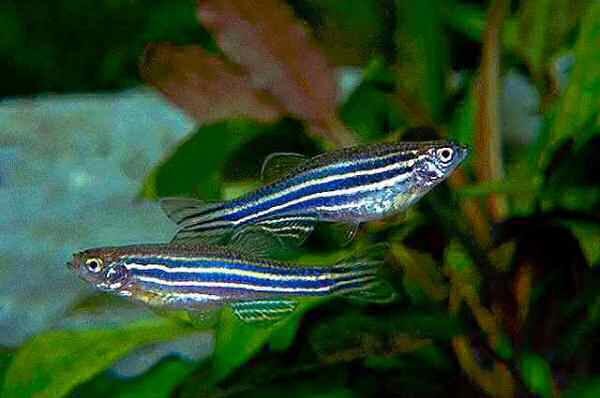
Zebra Danio


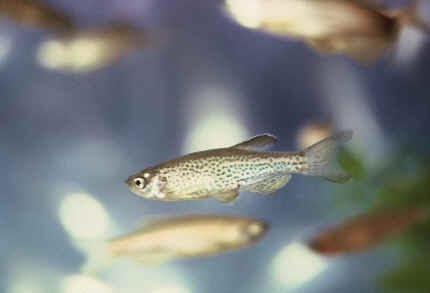
Spotted Danio


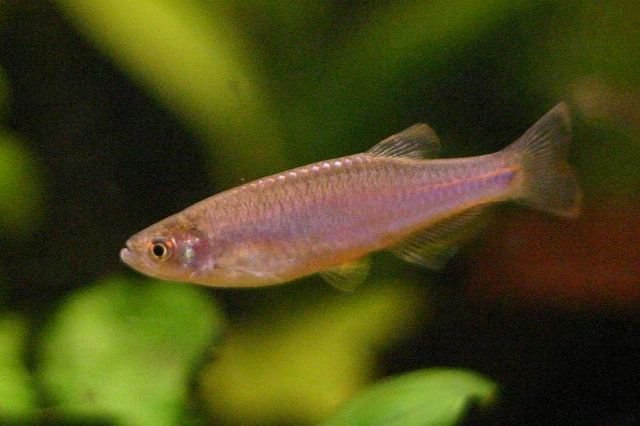
Pearl Danio


Pearl Danio

Description:

All Danios are torpedo-shaped fish, usually small (except for giant danio), and very fast. Some Danios, such as the Zebra Danio and the Leopard Danio, have very beautiful body patterns.

Habitat/Care:

Danios are omnivorous, accepting almost any foods. Although undemanding in diet, they particularly enjoy small live or frozen inverts, and fresh vegetable matter.

Mixing with other fishes:

Danios are highly peaceful fish that can be mixed with most other fish of similar size. A schooling fish, it prefers to be in groups of six or more.

Because they are very fast, they tend to be among the first to feed at meal times, so you need to ensure that slower eaters have some food to eat.

Diet:

Danios are omnivorous. In the wild, these fish consume various small aquatic insects, crustaceans, worms as well as plankton. For this reason, they can be used to reduce mosquito larvae populations in ponds and ditches.

Floating flake food and freeze dried blood worms are popular food for Danios. Both of these foods are available in most stores that sell pet fish. Danios also relish an occasional feeding of a few live Black Worms and live or frozen brine shrimp.

Some text noted that Danios are relatively fast, and are often among the first to feed.

Breeding:

Danios are somewhat unique, as they are quite loyal to their chosen mate. Mated pairs remain together, and rarely spawn with others, even if one mate dies.

The breeding tank should be set up with shallow water, approximately six inches deep. Furnish the tank with fine-leaved plants or a spawning grid on the bottom. Course gravel works well, as the eggs will fall between the gravel pieces and will be protected from the adult fish, which will readily eat their own eggs.

Spawning requires temperatures of up to 78 degrees F, and can be trigged by raising the water a couple of degrees near dawn, when spawning normally occurs. 300 to 500 eggs will be scattered across the bottom and on the plants. Remove breeders after spawning, as they will consume the young.

The fry will hatch in two days. They are very tiny, and can easily be lost when changing water, so take care when maintaining the grow-out tank. Feed the young commercially prepared fry food, or finely crushed dry foods. Powdered egg may also be added to the fry food to promote growth.

Disease

Danio are susceptible to Oodinium, (Velvet disease).

  • Oodinium - microscopic parasite that block the gills of fish.

    Symptoms:

  • Scratchs against hard objects
  • Fish is lethargic
  • Loss of appetite and weight loss
  • Rapid, labored breathing
  • Fins clamped against body
  • Fine yellow or rusty colored film on skin
  • In advanced stages skin peeks off

    Initially the fish rub against hard objects trying to dislodge the parasites. As the disease progresses the fish becomes lethargic, fins are held close to the body, appetite is reduced and the fish loses weight. A key symptom is difficult breathing, resulting in rapid gilling.

    Perhaps the most telltale symptom is the appearance of a velvety film on the skin that resembles gold or rust colored dust. The film may be difficult to see, but can be more easily detected by directing a beam of a flashlight on the fish in a darkened room. The parasite is most often seen on the fins and gills.

    Treatment :

  • Raise water temperature
  • Dim lights for several days
  • Add aquarium salt
  • Treat with copper sulphate for ten days
  • Discontinue carbon filtration during treatment

Variants:

  • Zebra Danio - The fish is named for its five uniformly, pigmented, horizontal blue stripes on the side of the body; all extending to the anal fin onto the end of caudal fin rays of its tail. The males have gold stripes between the blue stripes and females have silver stripes instead of gold.
  • Pearl Danio - pearly blue-violet hued body is accented by an orange-red stripe running from tail to mid-body. Males are smaller, slimmer, and more colorful, often showing a red tint along the ventral aspect.
  • Leopard Danio - have spots on its body similar to that of a leopard spots.
  • Gold Danio - are similar to Zebra Danio in that it also have strips yellow-golden and white strips on the sides of the body;
  • Spotted Danio - have a blank line in their side, and below the line, small black spots can be seen.
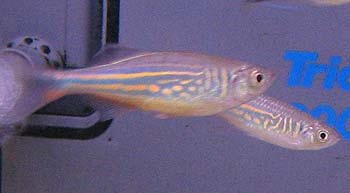
  • Giant Danio - this danio can grow to 6 inches (15 cm). They are characterized by a blue and yellow torpedo shaped body with gray and clear fins.

Photo Galley

Got a photo? Contact me.
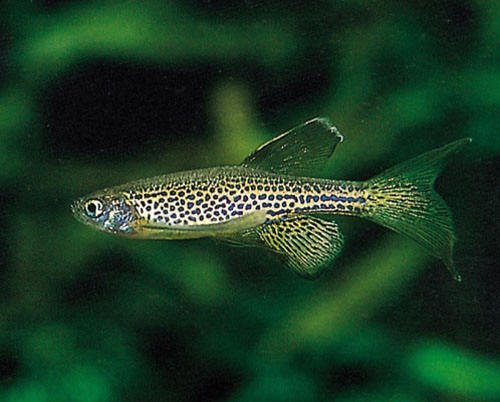

leopard Danio

Pearl Danio


Leopard Danio

Giant Danio


Hi-Fin Zebra Danio

Zebra Danio


References Cited:

1. Zebra Danio, [Online], Available http://freshaquarium.about.com/cs/cyprinids2/p/zebradanio.htm
2. Danios for Sale, [Online], Available http://www.aquariumfish.net/catalog_pages/cyprinids/danios.htm
3. Zebra Danio, [Online], Available http://en.wikipedia.org/wiki/Brachydanio_rerio
4. Velvet (Oödinium pilularis), [Online], Available http://freshaquarium.about.com/cs/disease/p/velvet.htm
5. Giant Danio, [Online], Available http://en.wikipedia.org/wiki/Danio_aequipinnatus

Sunday, April 09, 2006

Koi


Data Sheet

Scientific Name: Cyprinus Carpio
Other Names: Carp
Family: Cyprinidae
Origin: Japan
Adult Size: 90 cm (3 feet)
Social: Good.
Lifespan: 30 years
Tank Level: mid - bottom dweller

Minimum Tank Size: 40 gallons and up. Koi grows very fast, so you should be prepared to get a bigger tank
Diet:
Omnivore
Breeding: Egglayer
Care: Easy - this is hardy fish
Ideal pH: 7.2 to 7.8
Temperature: 65°F-75°F, 20°C-25°C
Tank setup: - see below -

Sexing:
It is impossible to sex koi smaller than about 25cm(l0in) in length, because they are sexually immature.

Once the koi exceed this size, the testes (in males) and ovaries in females) begin to develop. The ovaries are much larger organs than the testes. Females are usually easier to spot, as the belly of a mature female koi is generally plump, whereas males remain streamlined and more 'torpedo' shaped.


Description:

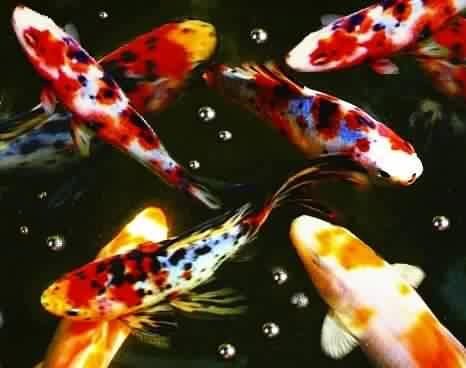
Koi (Japanese: 鯉, koi) are ornamental domesticated varieties of the common carp Cyprinus carpio. They are very closely related to goldfish, and in fact the style of breeding and ornamentation has become very similar, probably through the efforts of Japanese breeders to emulate goldfish, but they are not goldfish.

In Japanese, the word koi simply means "carp" referring to the dull grey fish. Nishikigoi (錦鯉: "brocaded carp"), in Japanese are the ornamental carp. This article is about Nishikigoi, and uses the English word koi to refer to the colorful fish.

Habitat/Care:

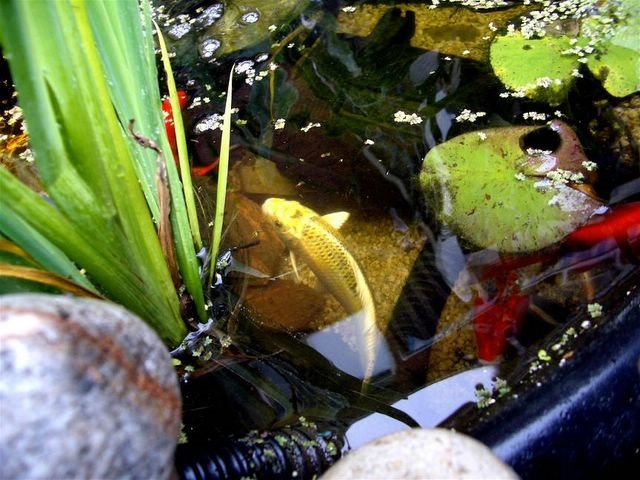
The common carp is a hardy fish. They can be kept in anything from small containers to large outdoor ponds. Koi can grow to 90 cm (3 ft). Some people thinks that the traditional indoor aquarium is less desirable than a round plastic tub for keeping koi.

Koi are cold water fish, so it's advisable to have a meter or more of depth in areas of the world that become warm during the summer. In areas that get harsh winters, it is a good idea to have a pond that is a minimum of 1.5 meters (4 1/2 feet) deep so that it won't freeze solid. It is also a good idea to keep a space open with a bubbler and a horse trough heater.

Koi's bright colors put them at a severe disadvantage against predators; a koi looks like a visual dinner bell against the dark green of a pond. Herons, kingfishers, raccoons, cats, foxes, and badgers are all capable of emptying a pond of its fish. A well-designed outdoor pond will have areas too deep for herons to stand in, overhangs high enough above the water that mammals can't reach in, and shade trees overhead to block the view of aerial passersby. It may prove necessary to string nets or wires above the surface.

The pond should include a pump and filtration system to keep the water clear.

Koi are bottom-feeders, so koi food is not only nutritionally balanced, but designed to float so as to encourage them to come to the surface. When they are eating, you can also check for parasites and ulcers. Koi will recognize the person feeding them and gather around at dinnertime. They can even be trained to take the food from one's hand. In the winter their digestive system slows nearly to a halt, and they eat very little, perhaps no more than nibbles of algae from the bottom, and their appetite won't come back until the water warms up in the spring. If kept properly, koi can live about 30-35 years.

Mixing with other fishes:

Koi can be mixed with other peaceful fish like goldfish. Avoid mixing them with smaller fish (that can fit into their mouth). Other good tank mates includes most bottom feeders.

Diet:

Staple pellet foods are nutritionally balanced and should be the main food source for koi. However, their diets can be supplemented with a variety of treat options including fruits and vegetables. Since koi are omnivores that eat both meat and vegetable matter, these additions will be eagerly accepted.

With an abundant supply of fresh fruits and vegetables at reasonable prices, summer is the perfect time to offer koi something extra to eat. More importantly, summer is the main growing season for koi when they need to build their winter reserves. The extra nutrition and calories from fruits and vegetables encourage healthy growth and weight gain.

For a high-protein dietary supplement, consider freeze-dried foods such as krill and baby shrimp. Freeze-dried krill are very nutritious and full of natural vitamins, minerals, and are rich in carotenoid pigment for the added benefit of color enhancement.

The varied choices of supplementary treat options can make selection difficult, so experiment to discover new koi favorites. When feeding fruits or vegetables, cut them up into bite size pieces to make it easier for your koi to eat. Be sure to remove any uneaten food immediately since leftover fruits and vegetables can rot and compromise water quality.

Breeding:

Koi are considered immature until they are 3-4 years old. Color is not relevant to sex. Males stay long and lean. Females get a low bulge, often a flat tire-look to their lower rear half. Good spring protein will help get them ready for spawning, but don't feed protein foods before 60-65 water temperatures. Start with similar koi for the best results, showa, sanke, kohaku or Ogons of similar color. The percentage of attractive fish is low to start with; it will be much lower dissimilar fish are used. Females won’t go into a spawn naturally if there is not enough dominate males to complete the full egg stripping, nor would you want them to. Females that start releasing their eggs must finish or the eggs will rot inside the body and will poison or kill the fish if not removed. A ratio of 2-3 males the same size as the female is recommended.

Koi literature states they will spawn as the water passes over 70 degrees F, but my experience is that will go after the water has been raised this high and a cool spell brought it down once, and the second time they hit 70 they are triggered.

Koi eggs are individual tapioca-like spheres. They may cover roots and stick to the sides, but they are all independent. Those long strings of sticky eggs with black-grey centers that get wrapped around plants are frog eggs, not koi or gold fish.

Spawning material is a big plus both for inducing the spawning as well as helping to protect the eggs from being eaten from the adults. This is also needed if the eggs are being removed to a separate area to hatch and mature.

Disease:

This is a very brief guide to some common koi diseases from Planet Koi.com. It is in no way a substitute for a good book on the subject or professional help. Unless specifically stated most of these problems can be treated using commercial remedies. Check with your local aquarium supplier if you don't know which to buy.

  • Sliminess of the skin. A greyish white film of excess mucus on the body. This is a reaction to protozoan parasites. Other symptoms of infection by these parasites are scratching and leaping followed by lethargy and failure to eat. Further risks are secondary bacterial and fungal infections of wounds caused by scratching. The parasites are particularly active in spring when koi are still recovering from winter.

  • White spot (Ich). White spots symptoms are scratching and swimming into the water inlet, failure to feed and lethargy. It is fatal if untreated. Fortunately commercial white spot remedies are widely available.

  • Anchor worm. The female worm buries into the skin and underlying tissue of koi to hold on. The damage caused can become a target for bacterial or fungal infection which can spread.

  • Fish lice - They have a sucker to hold on to the koi with needlelike mouthparts which they stick into the koi and inject a toxin. This causes intense irritation to the koi and they scratch and jump and can cause bacterial infection. If they infect the gills they cause severe damage and often death. Most antiparasite remedies will not kill fish lice, a strong chemical is needed which is not freely on sale. Ask a vet.

  • Gill maggots. Heavy infestations can cause severe damage, eroding the gill filaments and allowing secondary infections to develop.

  • Skin and gill flukes. These are the fish equivalent of fleas. They are two different types of flukes, but despite of their names both can be found on the body and the gills, feeding on mucus. They use hooks to hold onto the koi, this causes irritation and in a weak, sick or stressed koi can become a problem.

  • Saprolegnia fungus. One of the most common fungal infections of koi. The fungal spores will grow anywhere on the koi, including the gills, initially germinating on dead tissue. Their threadlike hyphae release digestive juices which break down the tissue so the fungus can absorb it, as the fungus grows these juices start breaking down living tissue. Fungus on the body appears as cotton wool like growths, it is hard to tell if a koi has it in the gills, but if it hangs at the surface gulping for air it is likely.

  • Carp pox. A virus that produces solid waxy lumps on koi. It will not kill koi and is generally harmless, but can look unsightly. It is most often present in small koi and in cold weather, clearing up disappearing when koi grow and in the spring when water temperatures rise.

  • Finrot and ulcers. A number of bacteria are associated with finrot, lesions and internal haemorrhaging, notably Aeromonas and Pseudomonas. Ulcers usually start at the site of an injury, the bacteria then infect it causing further damage, and fungal infection can also occur. Such holes result in osmoregulatory problems, leading to damaged kidneys and death if not treated. It is worth adding a weak salt solution to the pond as well as anti bacterial remedy, a concentration of 3gm per litre will help to restore the osmotic balance and reduce strain on the kidneys (make sure that the salt is fully dissolved before you add it to the pond). Finrot is easily noticeable, the fins and/or tail look chewed and are red at the edges. Secondary bacterial and fungal infections can develop.

  • Cotton wool disease. Another bacterial infection. The common name comes from the white tufts that develop around the mouth and spread to the body and fins, often leading to ulcers and a thin appearance. Flexibacter is the bacterium which causes this disease. Treatment with anti bacterial medicine is usually effective.

  • Dropsy. Raised scales (rather like a pine cone) and eyes standing out from the head. A sign of a number of conditions, may be congenital heart or kidney failure or an internal bacterial infection. Bacterial dropsy is infectious so treat with an anti bacterial remedy and if possible isolate affected koi.

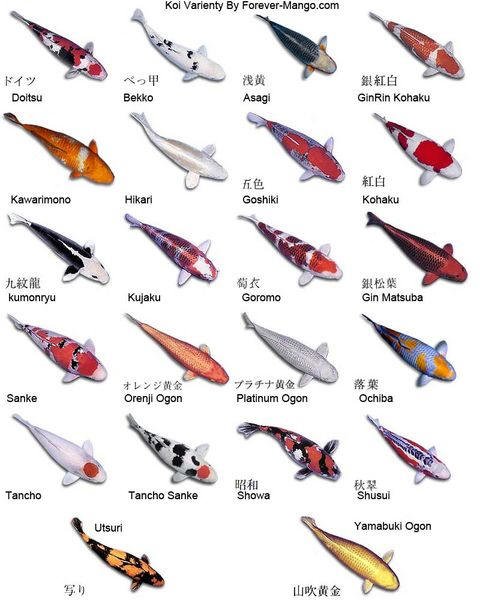
Variants:

Photo Gallery

Got a photo? Contact me.


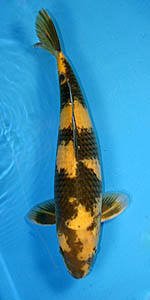
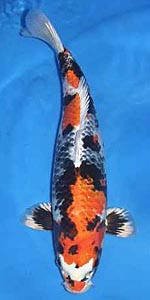
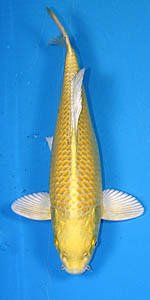
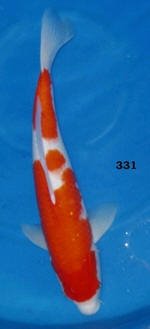
Oshiban

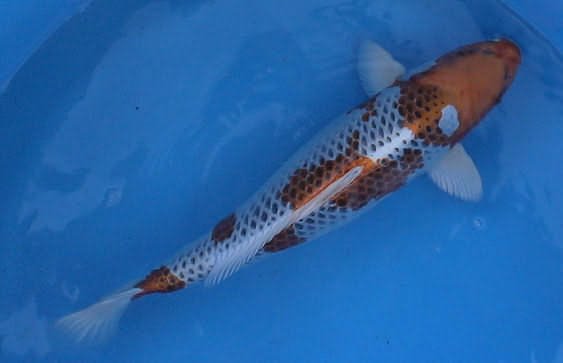
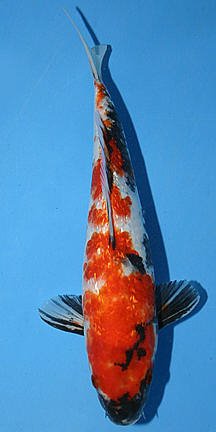
Goshiki

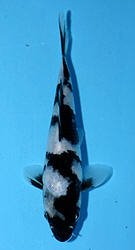
Utsuri

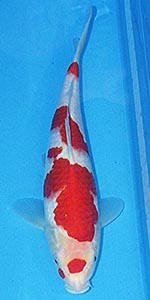
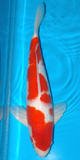
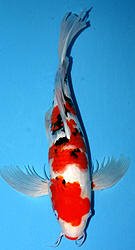
Kohaku

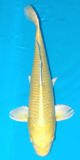
Yamabuki Ogon

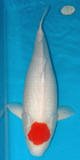
Tancho

Kujaku

Longfin Sanke

Utsuri

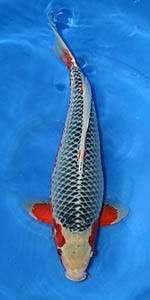
Gin Matsuba

Showa


Links to other awesome Koi sites:

1. http://www.keirinponds.com/ a site where you can top grade koi. Warning, it is quite expensive for high quality koi.
2. http://www.genkikoi.com/ another great site where top graded koi are sold.
3. http://www.koi.com/sales/ another great site to buy top graded koi.

References Cited:

1. Koi - Wikipedia, the free encyclopaedia, Available, [Online], http://en.wikipedia.org/wiki/Koi
2. Planet Koi : Koi Health, Available, [Online], http://www.koicarp.demon.co.uk/health.html/
3. David M., How to Breed Koi, Available [Online], http://www.ehow.com/how_13077_breed-koi.html
4. Drs Foster & Smith, Supplementing a Nutritionally Balanced Diet, Available [Online], http://www.drsfostersmith.com/pic/article.cfm?acatid=439&aid=964
5. How to Determine the Sex of Koi, Available [Online], http://www.pond-doctor.co.uk/longsexkoi.html

Monday, April 03, 2006

Arowana


Data Sheet

Scientific Name: Scleropages Formosus
Other Names: Arawana, Dragon Fish
Family: Osteoglossidae
Origin: Asia, Australia, Africa,
Adult Size: 90cm (55-58 inches)
Social: Predatory fish that will eat up smaller fishes. Highly territorial
Lifespan: 10-20 years.
Tank Level: mid-top dweller.

Minimum Tank Size: At least 3 times the width of your Arowana, and width same as Arowana length.
Diet:
Eats anything - live crickets, tapdoles, small frogs, small fishes, shrimps etc.
Breeding: Mouthbrooder
Care: Easy - Hardly fish
Ideal pH: 6.5-7
Temperature: 75-85 F (24-29C)
Tank setup: No plants or rocks recommended as this fish needs lots of space and plants and rocks may get in their way.

Sexing:
The male's mouth is wider and deeper.


Description:

In this family of fishes, the head is bony and the elongate body is covered by large, heavy scales, with a mosaic pattern of canals. The dorsal and the anal fins have soft rays and are long based, while the pectoral and ventral fins are small. The name 'bony tongues' is derived from a toothed bone on the floor of the mouth, the 'tongue', equipped with teeth that bite against teeth on the roof of the mouth.

Habitat/Care:

In the wild, the Arowanas prefers to stay in shallow waters (above five feet deep), near riverbanks and in shaded areas. Arowanas prefer these areas not because they are avoiding the elements, but because insects are plentiful in shaded areas and these are their main source of food.

Mixing with other fishes:

Medium to Large bottom feeders are ideal tank mates for the Arowana. The Arowana will leave these bottom feeders alone. Other peaceful large fish may be safety kept with Arowana. Take care not to include fin-nippers with the Arowana. Smaller fish that will fit into the Arowana mouth will be eaten.

Arowanas are generally highly territorial and will not tolerate another Arowana in a small tank. In a large open pond, however, it has been noted that several Arowanas can be safety kept together. Wikipedia recommends that 5-6 Arowanas should be kept together in a tank instead of 2-3 as when in a group, their aggressiveness tends to be subdued.

Diet:

Arowana prefer live food or at the very least floating food. They will generally not eat from the bottom of the tank. To this end keeping your Arowana with a suitable bottom feeder may be a good idea.

These foods can include: worms, crickets, grasshoppers, locus, fly, small frogs, small fish (limited quantities) and shrimps with shells. Some Arowana may take floating fish food.


Some foods help to promote a good colour in your fish. Prawns contain cerotine which helps bring out the red and gold colours of the Arowana fish. It is recommended however to maintain a varied and balanced diet for any Arowana Fish.

Feeding patterns effect both size and colour of your Arowana Fish. Over feeding can make your fish grow faster however this may adversely affect both colour and long term health of the fish. Since the size, colour and health of your fish are all very important, you are advised not to regularly overfeed any Arowana Fish.


Folklore:

For the Chinese, the dragon is a symbol of good luck and prosperity. In the eyes of the Chinese, the dragon fish has the appearance and majesty of the Chinese Dragon, especially the scales - it resembles the scales of a Dragon.

When a Chinese businessman purchased one of these fishes, then strike a big fortune, the rumor mills were working overtime that he attribute his good luck to owning one of these fish. Soon, demand for this fish rocketed as many others hope that keeping a dragon fish will bring them luck.

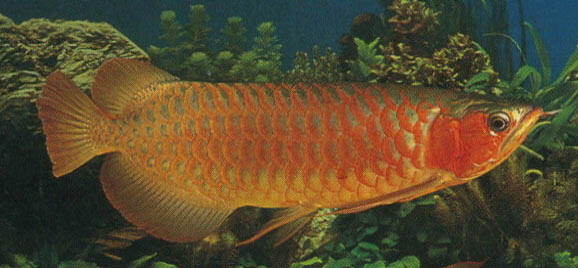
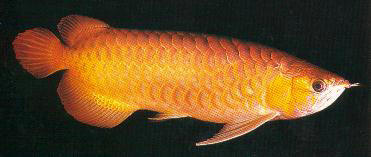
There are 3 types of Asian Arowana - the Red, Gold and Green. For the Chinese, Red is a lucky color, as evidenced by the large amount of red used during Chinese New Year. This makes the Red dragon fish in high demand, and prices for a good quality red can easily fetch around SG$8,888/=. Gold is also considered lucky. However, it is surprising that Green variety is not very popular and is consider unlucky, especially in Cantonese speaking countries like Hong Kong, Shenzhen and Guangzhou. The Cantonese who keep a green Arowana in their home and often gamble are said to "shee tou meen cheang cheang" (lost till their faces turn green).

Breeding:

Between 30 to 40 Arowanas between the ages of five and seven, half of them male, half of them female were released in a pond. They were left in the pond to allow them to pair themselves off, while the fish farmers observed from afar with binocular.

After sometime (between one and six months): compatible male and female Arowanas couple by themselves. However, this does not mean that with 30 to 40 Arowanas, you will see 15 to 20 pairs. On the contrary, it is sometimes impossible to get even one pair.

The farmers continued to keep a close watch on the pair. The males are mouth brooders, and will keep the eggs and fry in the mouth. Sometime later, the male was seen releasing young Arowanas from his mouth for between three and five minutes before drawing them back into his mouth again. At this stage, a net was dropped into the pond to segregate the couple and their young from the other Arowanas. After the young were free-swimming, they were netted and kept in separate tanks to grown individually, feeding on bloodworms.

Observations have shown that the female Arowana spawns once a year and each successful spawn produces between 30 and 80 young.

Illness:

Basically, the Arowana is a very hardy fish; even for first time fish owners. However, due to unsuitable water conditions, poor diet, high nitrate levels, etc., illnesses like bulging eye, cloudy eye, gillc-urling, external parasites, fin rot, dropsy and internal bleeding may occur. Watch out for the last two symptoms as they are likely to be fatal.

In all cases, raise the water temperature to 34 degree Celsius and add about 0.03% salt to the water (i.e. 300g of salt for 100litres of water). It is often helpful to add a wide spectrum medicine with anti-bacterial or anti-parasitic compounds. Medicines like tetracycline, acfriflavine may also help.

One point to note: do not be too concerned over fin rot caused by fighting. Even in cases where extensive damage to the whole tail has been done, the recovery period is only a matter of weeks.

Variants:

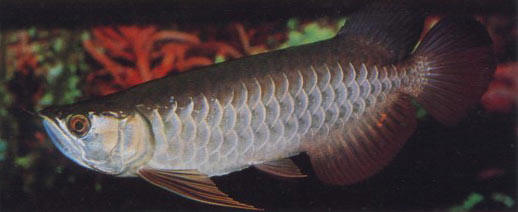
  • Asian Arowana - are the most expensive of all because they are near-extinct . They are protected species and mainly from Thailand , Sumatra and Malaysia . Asian Arowana have three main colors - Red , Gold and Green.
  • Australia Arowana - originated from Australia and they look similar to Asian Arowana . Australia Arowana got two types - Pearl and Spotted Arowana . Both looked the same except for the scales and colors. There are even Red or Gold Pearl Arowana.
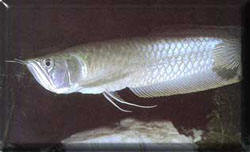
  • Silver Arowana - is the most common Arowana. It is also the cheapest. Silver Arowana have long fin and tail with its whole body silver in color. It can grow up to a very large size about 49 inches!
  • Black Arowana - is the same as Silver Arowana but its fin and tail are black-color. Black Arowana are harder to raise than Silver Arowana.

Photo Galley

Got a photo? Contact me.


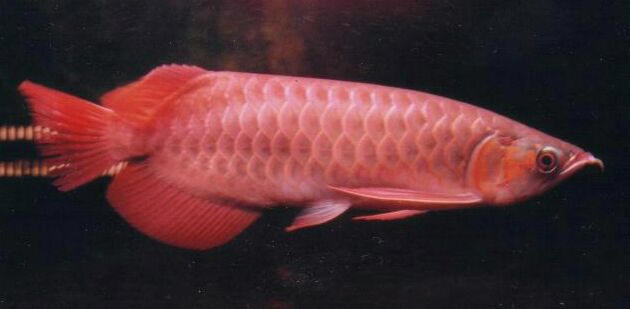
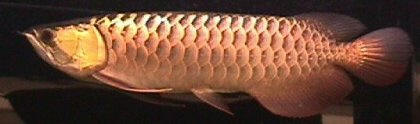
A superb red arowana

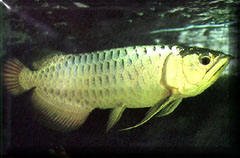
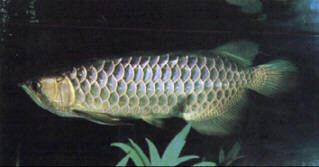
Gold, blue scales

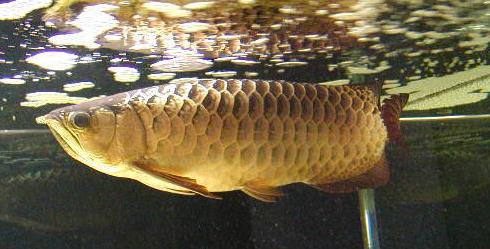
A Gold Arowana with black scales

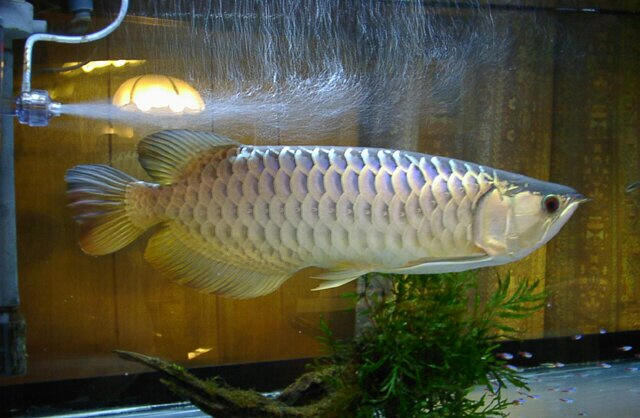
Super Shiny Gold Arowana

Red Arowana

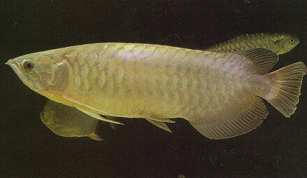
Gold Arowana

Links to other awesome Arowana sites:

1. http://www2.wbs.ne.jp/~arowana/egallery.htm Awesome Photo Galley of Arowana kept by Japanese
2. http://www.luckytropical.com/english/arowana.asp?cat=Red%20Tail%20Arowana&pgno=1&lang=en Another good photo galley.
3. http://arowanaclub.com/gallery/ Amazing collection of Arowana photos.

References Cited:

1. K.K.P Lim & P.K.L Ng, 2000, A Guide to the Freshwater Fishes of Singapore, Singapore Science Center.
2. Billy Lim, 1999, Types of Arowana, [Online], Available http://web.singnet.com.sg/~lin1629/Types.html
3. Dragon Fish Industry, [Online], Available http://dragonfish.com/
4. Arowana Dragon Fish feeding Information, [Online], Available http://www.arowana.co.uk/feeding-arowana.htm
5. Arowana General Care [Online], Available, http://www.aquariumhobbyist.com/ozarowana/care.html
6. Silver arowana - Wikipedia [Online], Available http://en.wikipedia.org/wiki/Silver_arowana
7. Arowana Breeding [Online], Available http://arowana8.tripod.com/Arowana/breeding.html